Why Drylands Need a Different Restoration Approach
Dryland restoration is not a copy of what worked in wetter places. Water, recovery timing, pressure, and design all need their own logic.
When people talk about restoration, they often imagine a simple formula.
Plant trees. Add water. Fence an area. Bring in a project. Wait for green growth to return.
Sometimes those things help. But in dryland regions, that kind of thinking is often too simple.
Drylands do not behave like wetter landscapes. Rain falls differently. Water moves differently. Vegetation recovers differently. Pressure from grazing or human use affects the land differently. Even the margin for error is different.
That means restoration in drylands cannot just be a copy of what worked somewhere greener.
It needs its own logic.
Drylands are not empty landscapes
One of the first mistakes people make is assuming drylands are somehow “empty” or “less alive” than wetter places.
But drylands are not lifeless. They are simply more selective.
Life in drylands often depends on:
- short rainfall windows
- seasonal recovery
- careful water retention
- plant species adapted to stress
- movement patterns of animals and people
- a much tighter relationship between use and recovery
That makes these landscapes more sensitive to pressure, but it also means they often hold forms of resilience that are easy to miss if you do not know what to look for.
A dryland may appear sparse, but that does not mean it is unimportant or unproductive. It means it operates with less margin and more dependence on timing, cover, and recovery.
The biggest difference is water
If there is one thing that shapes restoration in drylands more than anything else, it is water.
Not just how much rain falls, but:
- when it falls
- how fast it runs off
- whether it infiltrates
- where it collects
- how long it stays available
- what the land does with it once it arrives
In wetter systems, people can sometimes get away with poor land design because there is more water in the system overall.
In drylands, you usually cannot.
If water runs off too quickly, if the soil cannot hold it, or if vegetation is too weak to slow it down, then every rainfall event becomes less useful than it could have been.
That is why dryland restoration often starts with questions like:
- Where does water move?
- Where does it slow down?
- Where does it disappear?
- Where could the land hold more of it?
Those are not secondary questions. They are often the foundation of the whole restoration approach.
Drylands recover more slowly — and more unevenly
Another key difference is recovery speed.
In dryland regions, vegetation recovery may be:
- slower
- patchier
- highly seasonal
- dependent on short rainfall events
- easily disrupted by repeated pressure
This matters because people often judge restoration too quickly.
A place may not “green up” dramatically right away, but that does not always mean nothing is happening. On the other hand, a brief flush of growth after rain does not always mean the system is healthy again.
In drylands, it is important to look beyond short-term appearance and ask:
- Is the land retaining water better?
- Is cover improving over time?
- Are useful species returning?
- Is the area recovering after use?
- Is the pressure changing?
That is a more realistic way to measure progress.
Pressure matters more when recovery windows are small
In many dryland settings, the land only has limited opportunities to recover.
That means if grazing, trampling, cutting, or repeated use happens at the wrong time, the effect can be much more serious than people realize.
A wet landscape may absorb certain kinds of misuse and still bounce back reasonably well.
A dryland often cannot.
That is why restoration in drylands has to pay close attention to:
- timing
- recovery periods
- protected zones
- animal movement
- local use patterns
- seasonal behavior
In other words, restoration is not only about adding something to the land. It is also about managing pressure more carefully.
That may involve:
- recovery areas
- rotational use
- temporary protection
- community agreements
- different access patterns
- practical stewardship systems
Without that, even good restoration efforts may struggle to hold.
Tree planting alone is rarely enough
This is an important point, especially because so much restoration language is centered around planting trees.
Trees can absolutely matter in dryland restoration. But when tree planting becomes the whole strategy, problems usually follow.
Why?
Because dryland restoration often depends just as much on:
- grasses
- shrubs
- ground cover
- soil stability
- infiltration
- water-harvesting structures
- local maintenance
- protection from repeated pressure
If those conditions are weak, planting trees alone may lead to low survival, high maintenance needs, and disappointing outcomes.
A better question is often not:
How many trees can we plant?
But:
What kind of landscape recovery does this place need first?
Sometimes trees are part of that answer. Sometimes grasses and shrubs matter more early on. Sometimes the first step is not planting at all, but changing water flow or giving land time to recover.
Drylands need practical design, not generic restoration language
Dryland restoration works best when it becomes specific.
Instead of broad language like:
- restore the ecosystem
- reforest the area
- improve sustainability
you need more grounded questions:
- Where are the runoff pathways?
- Where is the land bare and exposed?
- Where is pressure concentrated?
- Which areas recover and which do not?
- What would actually help this place hold more moisture?
- What can local people realistically maintain?
That is where concepts like:
- contour lines
- swales
- trenches
- bunds
- grazing zones
- nursery systems
- simple monitoring
start to matter.
Because they move the conversation from aspiration to design.
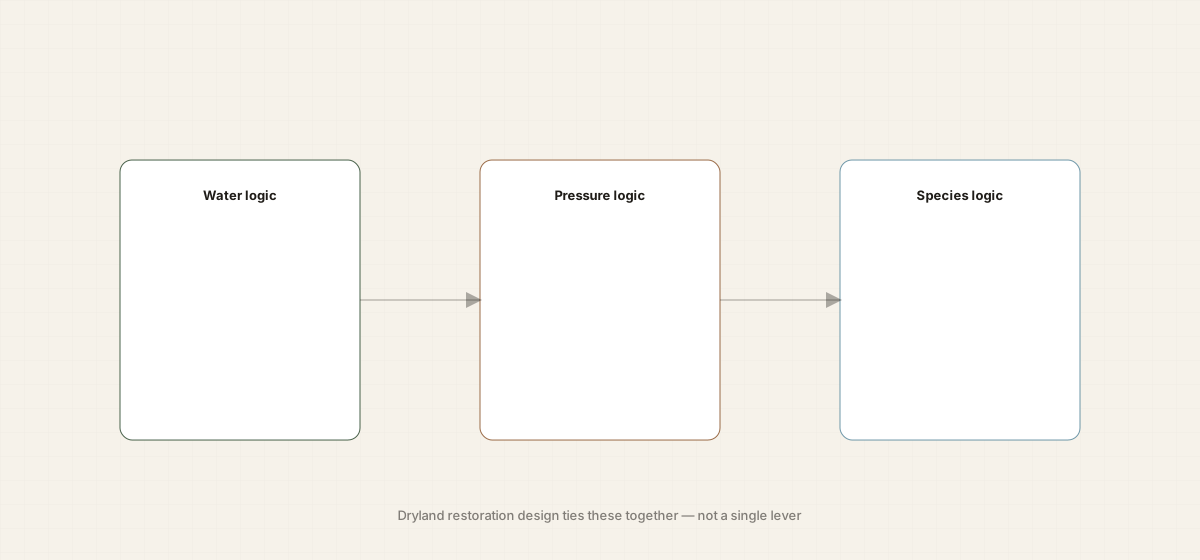
Dryland restoration must work with people, not around them
In places like Somalia, restoration is not just about ecology. It is also about how people actually live.
That includes:
- herding patterns
- access to water
- local movement
- livelihoods
- seasonal decisions
- labor availability
- community priorities
- local knowledge
This matters because a dryland restoration plan that ignores social reality will usually fail, even if the ecological theory behind it is sound.
You cannot design for pasture without thinking about herders.
You cannot think about water without thinking about daily use.
You cannot plan restoration zones without understanding how communities already move through the land.
So a good dryland approach has to be:
- ecological
- practical
- social
- adaptable
That is one reason community-centered models matter so much. Not as a checkbox, but because dryland systems are used systems. Restoration has to fit that reality.
Why Somalia needs this kind of approach
In Somalia, restoration has to be realistic about dryland conditions from the beginning.
That means understanding:
- uneven rainfall
- pasture pressure
- fragile water systems
- livestock dependence
- local mobility
- degraded recovery cycles
- the need for local implementation capacity
It also means avoiding imported solutions that look good in reports but do not fit the actual structure of the land or the life built around it.
A practical approach in Somalia is likely to involve a mix of:
- better water retention
- healthier grazing patterns
- simple local monitoring
- seedling and nursery systems where appropriate
- field crews and restoration works
- community participation
- small, well-designed pilots instead of oversized promises
That is what makes restoration believable.
Why this matters for Abuur Labs
At Abuur Labs, this is one of the central ideas behind how we think: dryland restoration needs to be designed for drylands, not adapted as an afterthought.
That is why we are interested in:
- reading terrain properly
- understanding water movement
- thinking carefully about grazing and recovery
- exploring practical technologies without overengineering
- building use cases that communities and partners can realistically test
Because the goal is not to create generic climate language.
The goal is to support restoration approaches that make sense on the ground.
A better way to think about it
So why do drylands need a different restoration approach?
Because they are not failed versions of wetter landscapes.
They are distinct systems with:
- tighter water constraints
- slower recovery
- narrower margins for error
- stronger dependence on timing
- closer links between land health and daily life
That means restoration has to be more careful, more practical, and more responsive to context.
Not more complicated for the sake of it.
Just more honest about how the system actually works.
And that honesty is what makes good restoration possible.
Key takeaway
Drylands need a different restoration approach because water is more limited, recovery is more fragile, pressure matters more, and successful restoration has to work with both the land and the people who depend on it.