How Village Gateways and Remote Sensors Could Support Community Resilience
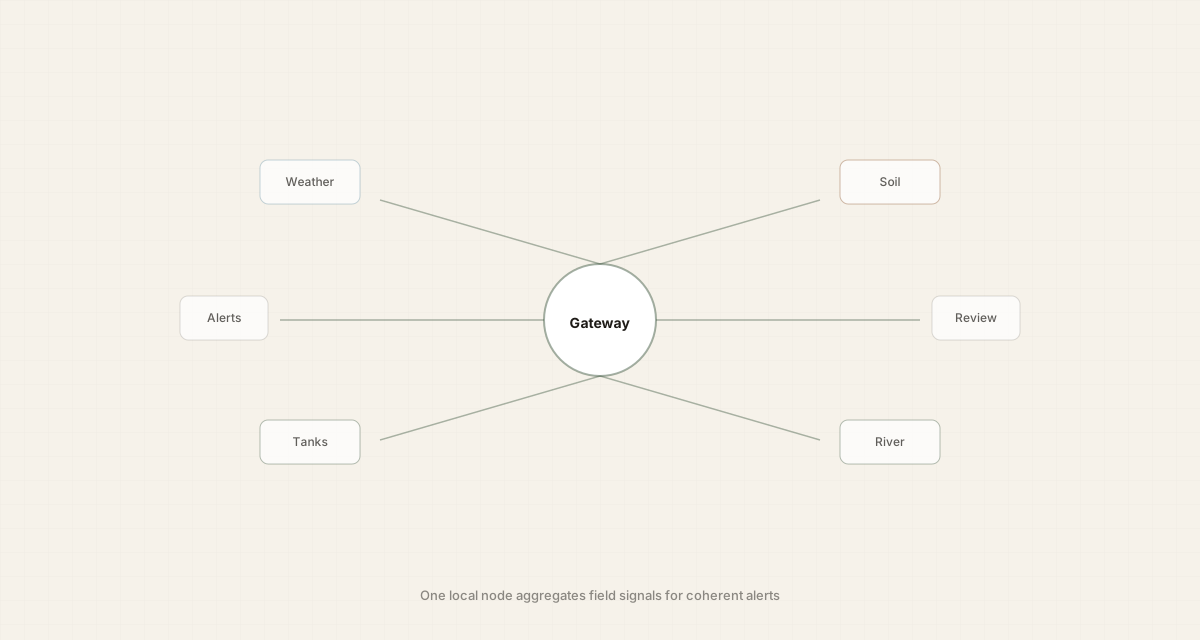
A village gateway is a shared local bridge: weather, soil, tanks, and rivers can report through one node so alerts and reviews stay coherent. The goal is not a smart city—just enough visibility to support restoration, water, and risk decisions on time.
A lot of environmental problems in rural areas are not just problems of land, water, or weather.
They are also problems of visibility.
A tank is running low, but nobody knows early enough. A flood level is rising, but the warning arrives too late. A restoration site is drying out, but there is no record of what changed. A grazing area is under pressure, but nobody has a clear picture of what is happening across the wider system.
That is where village-level sensing starts to become interesting.
Not because every community needs a complicated digital network. And not because sensors are the solution by themselves.
But because a small, practical sensing system can sometimes do something very valuable:
make changing conditions visible early enough for people to respond better
That is the role a village gateway and remote sensors could play.
The core idea
A village gateway is easiest to think of as a local collection point.
Instead of every device needing to talk directly to the internet on its own, smaller sensors can send their readings to a nearby gateway, and that gateway can then relay useful information onward.
That matters because in remote or low-infrastructure settings, direct connectivity is not always practical for every sensor.
A gateway-based setup can make it easier to support multiple small devices such as:
- soil moisture sensors
- simple weather stations
- water tank monitors
- flood or river level sensors
- rainfall gauges
- local temperature and humidity sensors
- even some restoration site monitoring points
The point is not to build a miniature smart city.
The point is to create a light village sensing layer that supports better decisions around land, water, and risk.
Why a village gateway matters
If you only have one sensor in one place, you may not need much system around it.
But once you start thinking about multiple points — a tank here, a riverbank there, a weather station nearby, a restoration plot further out — the value of a gateway becomes more obvious.
Without a gateway, each device may need:
- separate connectivity
- separate setup
- separate maintenance logic
- separate data handling
That becomes fragmented quickly.
A gateway can simplify that by acting as a shared local bridge between:
- field devices
- village-level conditions
- alerts
- dashboards
- operational reviews
- future planning
That does not make everything easy. But it can make the whole system more coherent.
What kinds of sensors actually make sense?
This is a really important question, because it is easy to imagine an endless list of devices.
A better starting point is: What conditions matter enough that earlier visibility would actually help?
In a village or dryland community context, some of the most useful candidates are likely to be:
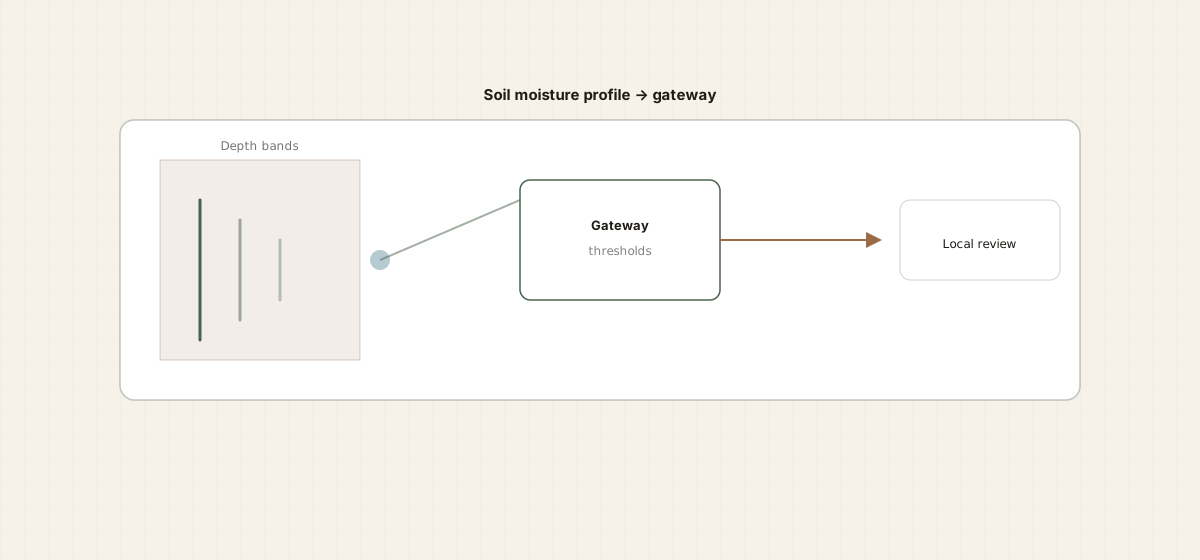
Soil moisture sensors
Useful in restoration plots, nurseries, demonstration sites, or recovery zones where you want to understand whether moisture conditions are improving or collapsing too quickly.
Weather stations
Useful for local rainfall, temperature, humidity, wind, and general seasonal pattern awareness. Even a small weather station can support better interpretation of what is happening on the ground.
Water tank sensors
Useful for knowing tank levels earlier and improving refill planning.
Flood or river level sensors
Useful in flood-prone areas where early warning matters.
Rain gauges
Useful where local rainfall matters but assumptions based on broader weather reports are too general.
Site condition sensors
In some cases, additional sensors may help with restoration site monitoring, depending on what is actually worth measuring.
The right system is not the one with the most sensors. It is the one that makes useful local conditions easier to understand.
Soil monitoring is a good example of where this could help
Soil monitoring is one of those ideas that sounds small, but can become very useful if placed in the right context.
For example, if a community is:
- testing a restoration plot
- establishing a nursery
- comparing different planting methods
- observing how fast a site dries after rainfall
- trying to understand why one area is recovering and another is not
then a small amount of soil data may help answer questions that are otherwise left to guesswork.
That might include:
- how long moisture stays in the ground after rain
- whether certain restoration methods are improving infiltration
- whether one site is drying out faster than another
- whether a nursery area needs different watering timing
- whether a treated site is behaving differently over time
The value is not in collecting endless soil data. The value is in supporting a few better decisions.
Weather stations add local context
A weather station is useful because it gives local context to everything else.
If you are trying to understand:
- why a site dried so fast
- why seedlings are struggling
- whether rains actually reached a certain area
- whether strong winds affected conditions
- how different seasons compare
then local weather data becomes extremely helpful.
That is especially true in places where wider regional weather information may be:
- too broad
- delayed
- not specific enough to the actual site
- disconnected from field decisions
A village-scale weather station can help provide:
- rainfall totals
- temperature patterns
- humidity trends
- wind conditions
- seasonal shifts
That does not solve any problem directly. But it gives a much better context for understanding all the others.
The gateway makes multiple signals more useful together
One of the strongest things about a gateway approach is not just that it connects sensors.
It is that it helps multiple kinds of local information sit together in one place.
For example:
- the weather station shows that recent rainfall was lower than expected
- the soil sensor shows a restoration plot is drying rapidly
- the water tank sensor shows demand is increasing
- the flood sensor shows river conditions are normal for now
None of those readings tells the whole story by itself. But together, they build a more useful picture of what is happening around the village.
That is often where resilience improves: not from one perfect device, but from several small signals becoming easier to interpret together.
This can support restoration, not just monitoring
It is important not to frame this as “sensoring the village” for its own sake.
The real value is in supporting practical things like:
- better understanding of restoration site conditions
- improved nursery management
- stronger water visibility
- earlier flood awareness
- clearer environmental records
- more informed local planning
- better pilot review over time
So the gateway is not really the story. It is part of the support layer around more meaningful goals:
- healthier land
- stronger water resilience
- earlier warning
- better learning
- more practical village systems
Why this matters for remote settings
In remote settings, one of the biggest constraints is not interest. It is the difficulty of maintaining separate technical systems everywhere.
That is why a gateway model is attractive.
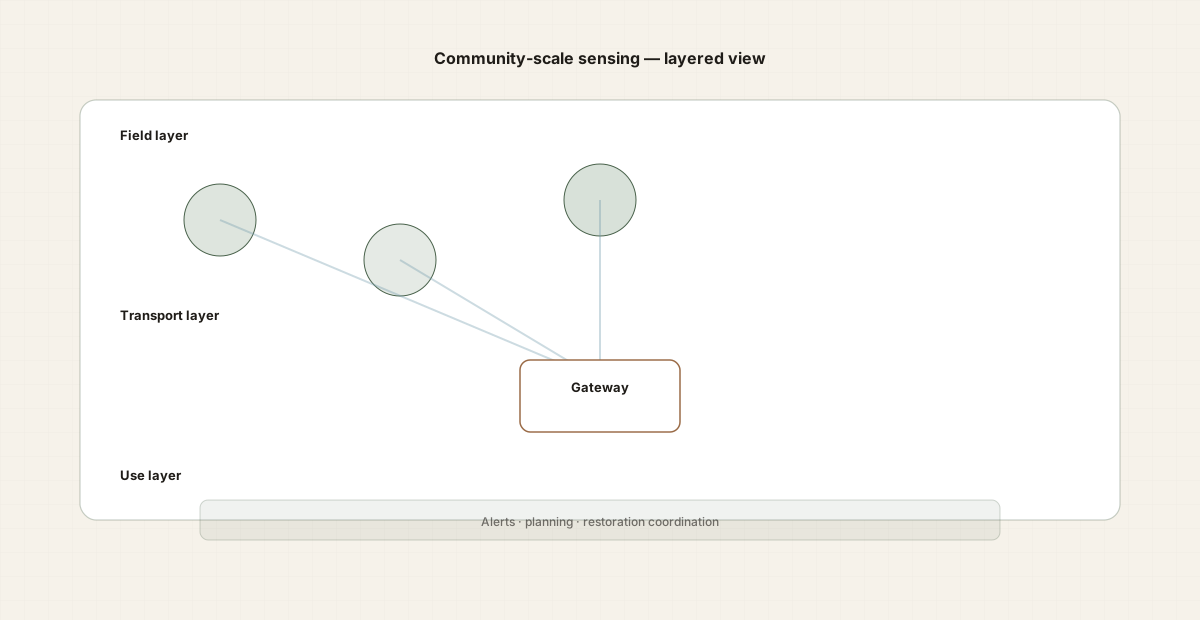
Instead of treating each sensor as its own isolated project, the village can have a small shared sensing backbone that supports multiple use cases.
That can make it easier to think in terms of:
- one village node
- several useful environmental signals
- one place for alerts and review
- one local resilience layer
This becomes especially valuable if the same system can gradually support:
- restoration pilots
- water systems
- flood warning
- local weather awareness
- future environmental programs
That is a better long-term direction than building disconnected tech experiments one by one.
What this could look like as a pilot
A realistic pilot could stay quite focused.
For example:
- one village gateway
- one weather station
- one or two soil monitoring points
- one tank level sensor
- optionally one flood or river sensor if relevant
- simple alert logic for the most important conditions
- a lightweight dashboard or summary view
- periodic review of what information actually proved useful
The useful questions would be:
- Which signals mattered most?
- Which sensors were reliable enough?
- What information did people actually use?
- What added clarity, and what added noise?
- What should remain simple, and what might expand later?
That is the kind of pilot that teaches something real.
Where this could go next
If a village gateway model proved useful, it could evolve into:
- a broader local environmental monitoring layer
- support for multiple restoration plots
- local flood warning nodes
- stronger water operations visibility
- seasonal resilience reporting
- community dashboards
- village restoration profiles backed by live environmental data
Over time, it could also help connect local field sensing with:
- satellite planning
- drone surveys
- restoration site reviews
- nursery programs
- water planning
- grazing support systems
That is where the gateway becomes more than connectivity. It becomes a local environmental intelligence node.
What this does not solve on its own
It is important to be realistic here too.
A village gateway and remote sensors do not automatically create:
- better land management
- better water planning
- better local coordination
- flood safety
- successful restoration
Those still depend on:
- people
- local systems
- practical decisions
- maintenance
- useful interpretation of the data
The sensing layer helps by improving visibility. It does not replace local action.
That is exactly why it needs to stay lightweight and purposeful.
Why this matters in Somalia
In Somalia, and in similar contexts, a village gateway model could be especially relevant because many resilience problems share one feature:
conditions change locally, but visibility is weak
That may apply to:
- tank levels
- rainfall
- soil conditions
- flood risk
- restoration sites
- local environmental stress
A small sensing network anchored around a village gateway could help turn that weak visibility into something more usable.
Not a perfect digital system. Just a more informed local one.
And that may already be enough to improve how communities and partners understand what is happening on the ground.
Why this matters for Abuur Labs
At Abuur Labs, this pairing is interesting because it brings together several things we care about:
- practical local infrastructure
- environmental resilience
- restoration support
- lightweight technology
- community-scale systems
It reflects the kind of question we want to keep asking:
What is the smallest useful technical system that can make local environmental decisions clearer and more timely?
A village gateway model is a strong candidate for that kind of thinking.
A better way to think about gateways and sensors
So how should we think about a village gateway and remote sensors?
Not as an attempt to digitize everything.
But as a practical village-scale support system that helps make key environmental signals — like water, rainfall, soil conditions, and flood risk — more visible and more usable over time.
That is already a meaningful step.
Key takeaway
A village gateway combined with remote sensors such as weather stations, soil monitors, tank sensors, and flood sensors can create a lightweight local monitoring layer that helps communities and partners understand changing conditions earlier and make more informed decisions around resilience and restoration.