How Flood Sensors and Alerts Could Support Community Early Warning
Sensors do not stop floods—they shrink the gap between rising water and community awareness. Simple river-level monitoring, clear thresholds, and fast alerts can buy time for livestock moves, routes, and coordinated local response.
Floods are one of those risks that can feel sudden, even when the warning signs were building for hours or days.
Water levels rise upstream. Rainfall changes conditions further along the river. A bank becomes unstable. A low-lying area starts to fill. And by the time the danger is obvious, the window for easy action may already be closing.
That is what makes flood monitoring so important.
Not because sensors stop floods. They do not. But because earlier awareness can change what a community is able to do before the worst point arrives.
That may mean:
- moving animals earlier
- protecting equipment
- preparing evacuation routes
- warning households
- organizing local response
- reducing loss and confusion
So the real question is not whether a sensor “solves flooding.”
The useful question is:
Can simple flood monitoring give communities more time and better visibility before water becomes dangerous?
That is where this kind of system becomes worth exploring.
The real problem is often delayed awareness
In flood-prone areas, people usually already know which places are risky.
They know:
- which riverbanks tend to overflow
- which roads become unusable
- which low-lying areas flood first
- which seasons carry more risk
- where water tends to cut access
But even when that local knowledge exists, there is still a major challenge:
knowing early enough when conditions are actually changing
Without some form of monitoring, communities may depend on:
- visual observation
- word of mouth
- someone checking the river in time
- incomplete updates from other areas
- last-minute reactions once the risk is already obvious
That can leave very little time to prepare.
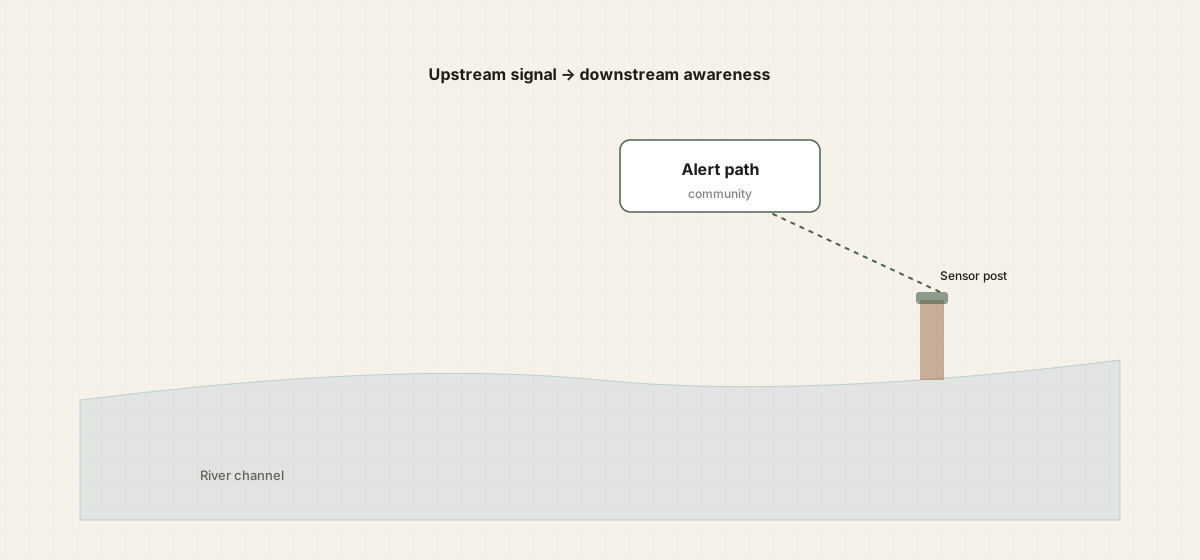
A flood warning system does not need to predict everything perfectly to be useful. Sometimes it only needs to do one thing well:
turn a late reaction into an earlier response
Why manual observation is not always enough
Manual observation still matters. In many places, it is the main form of flood awareness.
But it has limitations.
Somebody has to:
- be near the river
- notice the change in time
- interpret what it means
- communicate it quickly
- make sure the message reaches the right people
- trust that action will follow
That works in some cases, but it can also break down easily.
For example:
- the rise happens at night
- upstream conditions change faster than expected
- the message is delayed
- there is uncertainty about whether the increase is serious
- different people receive different information
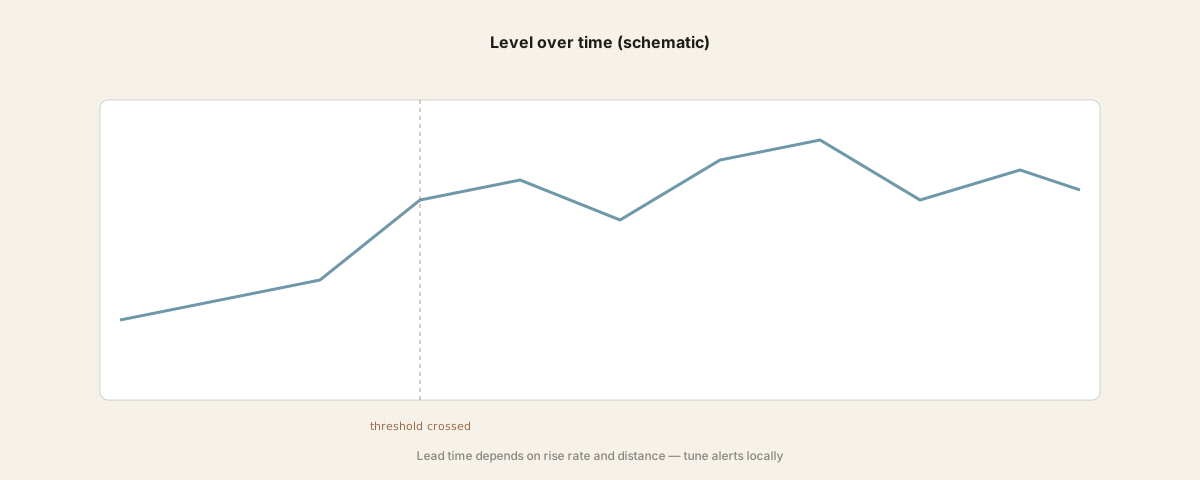
A sensor-based system does not remove uncertainty entirely. But it can reduce one important part of the problem: the delay between water rising and people knowing about it
That delay is often where the most useful time is lost.
What a lightweight flood sensing system could look like
A basic version of this kind of setup does not need to be complicated.
It might include:
- one or more river-level or water-level sensors
- a threshold for warning or critical conditions
- a device that sends periodic readings
- a simple alert when water rises beyond a defined level
- a message sent to local contacts, coordinators, or community groups
- optional logging so the history can be reviewed later
That is already enough to provide something valuable:
- a clearer signal that conditions are changing
- earlier awareness of flood risk
- a trigger for local preparation
- a record of what happened and when
The key here is not complexity. It is timing.
Why thresholds matter
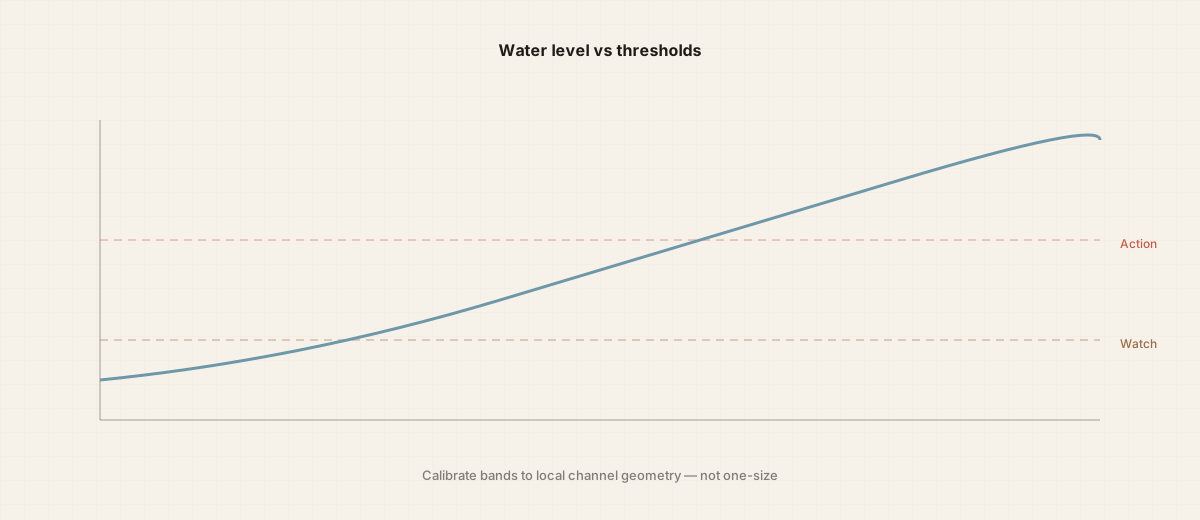
One of the most practical features in any warning system is the threshold.
A threshold is simply the point at which a change becomes important enough to trigger attention.
For flood monitoring, that could mean:
- a caution level
- a high-risk level
- a critical overflow level
The exact threshold depends on the river, the site, and the local context.
What matters is that the system moves from vague awareness to a clearer structure:
- normal
- rising
- concerning
- urgent
That creates a more usable decision framework.
Instead of: the water looks higher than usual
it becomes: the river has crossed the warning level, now the community should prepare
That kind of clarity is useful.
Alerts matter because preparation matters
The point of flood alerting is not the alert itself.
The point is what the alert gives people time to do.
That may include:
- moving livestock
- clearing vulnerable storage
- protecting equipment
- checking access routes
- warning nearby households
- organizing transport
- preparing for evacuation if necessary
Even a modest increase in lead time can make a big difference.
This is especially true in places where flood response capacity is limited and where households need time to make practical decisions.
So the system should be designed around a simple question:
What action should this alert make possible?
That keeps the monitoring tied to real use, rather than becoming data for its own sake.
Where notifications could fit
A flood sensing system becomes much more useful when it can trigger communication quickly.
That might include:
- SMS messages
- WhatsApp-compatible notifications where appropriate
- alerts to village leaders or local coordinators
- dashboard flags for operators
- simple warning messages to defined groups
The right format depends on the context.
But in many cases, SMS remains attractive because it is:
- lightweight
- familiar
- relatively accessible
- easier to use than a full app-based system
This is important because flood warning systems only help if the information reaches people in a form they can actually use.
That is why the notification layer matters just as much as the sensor.
Monitoring can also build local understanding over time
Another useful part of flood sensing is that it creates a record.
That means the system may help not only in the moment, but also afterward.
For example, over time it may help answer:
- how often warning levels are reached
- which sites experience the fastest level changes
- whether flood timing is shifting seasonally
- which communities need stronger preparedness measures
- whether certain locations should be prioritized for more support
That makes the system useful not only for alerting, but also for planning.
Instead of relying only on memory of past flood events, you begin to build:
- a flood history
- a record of river behavior
- stronger local understanding of risk patterns
That becomes valuable for resilience planning over time.
This is not just a sensor problem
It is important to say this clearly.
A flood warning system does not work just because the sensor is installed.
It still depends on:
- where the sensor is placed
- whether thresholds are set sensibly
- how alerts are received
- who is expected to respond
- whether communities trust the system
- whether warning messages are tied to practical action
So this is not only a hardware issue.
It is also a:
- communication issue
- preparedness issue
- local coordination issue
- system design issue
That is why the strongest flood monitoring models are usually not the most technically complex ones. They are the ones that connect monitoring to real local decisions.
What a pilot could look like
A realistic pilot could stay quite focused.
For example:
- one riverbank or flood-prone site
- one or two water-level sensors
- defined warning thresholds
- SMS alerts to a small group of local contacts
- a simple view of current and recent river conditions
- a review process after each significant event or rise
The goal would not be to build a national warning platform on day one.
The goal would be to test:
- whether the sensor readings are reliable enough
- whether alerts arrive in time
- whether the information is useful locally
- whether people act differently with earlier warning
- what the right thresholds and communication model should be
That is the sort of pilot that can teach something useful.
Where this could go next
If a basic model proved helpful, it could grow into:
- multiple monitoring points along a river
- stronger warning escalation logic
- community-specific alert groups
- siren or public warning integrations in some settings
- flood history records
- simple flood dashboards
- links to evacuation and response planning
- broader integration into a resilience monitoring platform
It could also connect with other systems over time, such as:
- rainfall tracking
- road access monitoring
- local infrastructure protection planning
- village-level preparedness tools
The key is to start with something small and genuinely useful.
Why this matters in Somalia and similar contexts
In Somalia and other flood-prone environments, early warning can matter a great deal because the cost of delayed awareness is often high.
Flooding may affect:
- homes
- routes
- livestock
- community access
- water infrastructure
- low-lying settlements
- storage and equipment
That means even a relatively simple warning improvement can have real value if it gives people more time to prepare.
A lightweight model built around:
- water-level sensing
- practical thresholds
- simple alerts
- local communication
- repeat review
may be much more useful than a heavy, centralized system that is harder to maintain or slower to trust.
Why this matters for Abuur Labs
At Abuur Labs, this kind of pairing is interesting because it connects:
- a real environmental risk
- local decision-making
- practical monitoring
- lightweight technology
- community resilience
It reflects a broader principle we care about: technology should make real-world decisions easier, earlier, and more grounded — not just more digital
Flood sensing fits that idea well.
The river is still the real story. The community response is still the real story. The warning only matters if it creates useful time for action.
That is why this kind of system is worth thinking about carefully.
A better way to think about flood monitoring
So how should we think about flood sensors and alerts?
Not as a complete flood solution.
But as a practical early visibility layer that can support earlier warning, better local preparation, and stronger community response when river conditions begin to change.
That is already meaningful.
Key takeaway
Flood sensors and alerts do not stop floods, but they can provide an earlier warning layer that helps communities prepare sooner, respond more clearly, and reduce the costs of delayed awareness.